From curiosity to possibility
My Story
Curiosity, science, and accessibility
I like understanding how things work. That curiosity has taken me from a chessboard to the magnetic field of the Sun, and from astrophysics to data science and app development. I enjoy the moment when a difficult idea begins to make sense, especially when I have someone to share it with.
I was born blind and grew up in Greece. Chess, mathematics, and physics gave me ways to explore questions that interested me. Following those interests also meant dealing with other people's assumptions about what I could do.
Gaining access to physics
When I decided to study physics, the first challenge was getting the opportunity to study it at all. Before entering university, I faced an admission policy that excluded blind students from the subject. Together with my family, I challenged that exclusion through a public campaign, interviews, and discussions with educational and political representatives.
I wanted to find out how far my curiosity and hard work could take me. Being told in advance that physics was not for me was a difficult answer to accept. I wanted the chance to try, and I wanted future students to have that chance too.
Entering university was only the beginning. Equations, diagrams, lecture notes, and laboratory equipment all raised practical questions about access. Working with supportive professors, I helped develop instruments with accessible readings so that I could carry out experiments independently. Therefore, not only did I have to put effort into studying, but at the same time I also had to develop the solutions that would allow me to participate in labs and classes. This may seem like a big problem to you, but it was probably one of the most important parts of my studies because it further cultivated my practical problem-solving skills and my ability to find accessibility solutions from scratch.
The help I got from friends and fellow students was invaluable too. We solved problems together, studied and despaired over the most complex maths, and celebrated our wins along with the ever-necessary nerdy physics jokes. Those relationships developed into some of the most valuable friendships in my life. Studying physics meant finding ways to participate in every part of academic life, from labs to student game nights and parties. I would even argue that the lessons in class were as important as those outside it.
Researching the Sun
My research began during my undergraduate studies at Aristotle University of Thessaloniki, where I worked with Professor Loukas Vlahos on solar physics. My undergraduate research explored the statistics of solar flares and their connection to turbulence.
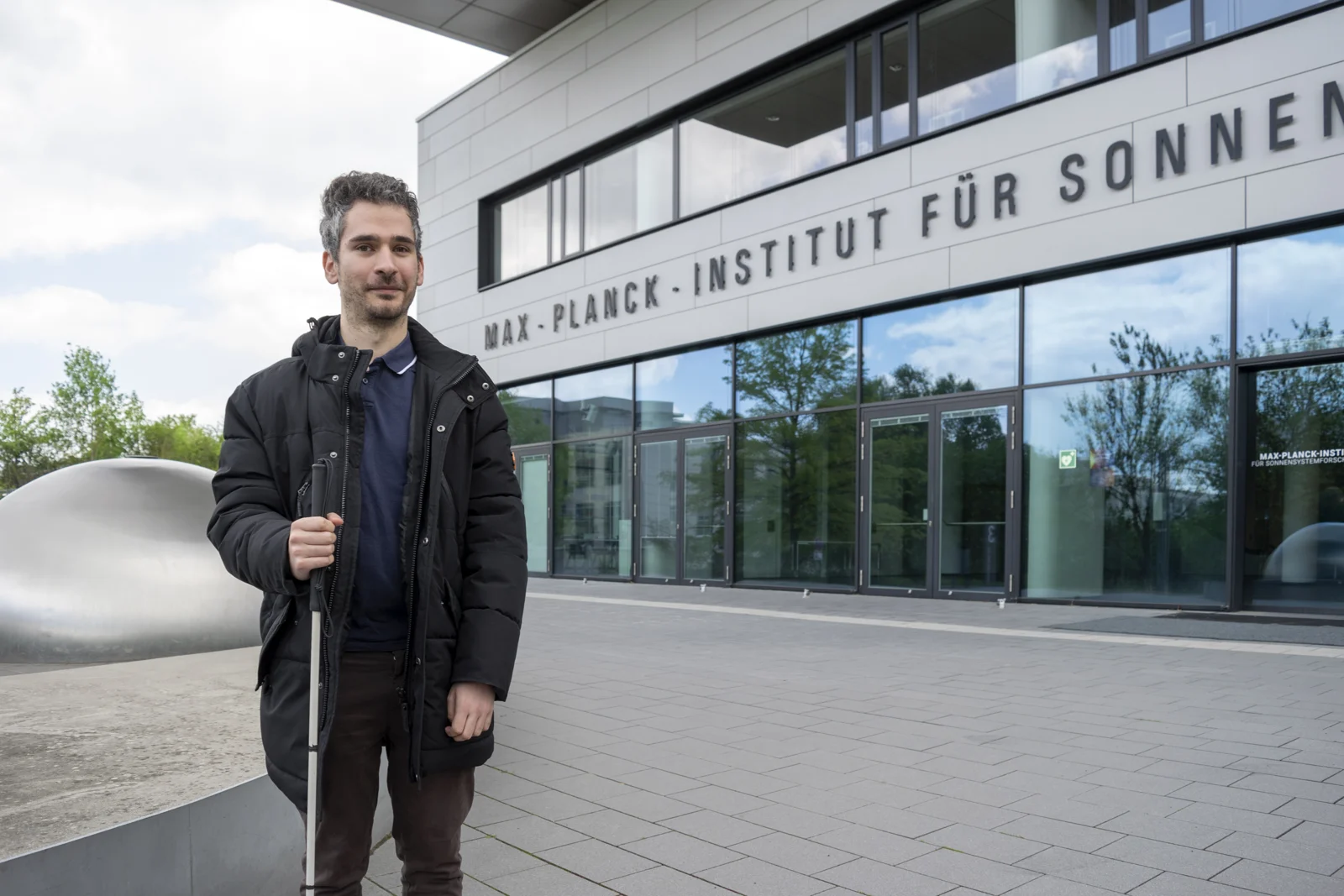
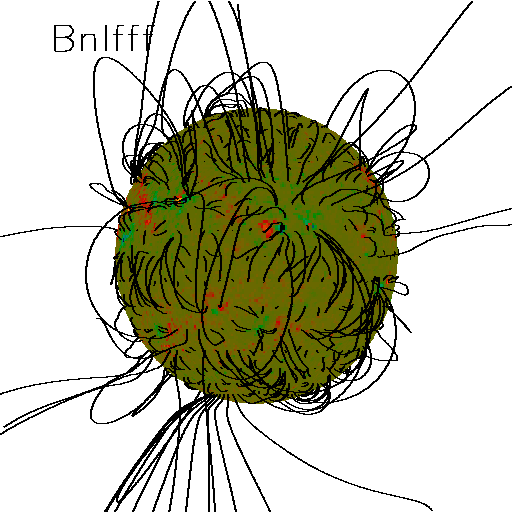
A summer research placement at the University of Oxford strengthened my interest in astrophysics and my ambition to pursue a research career. Because of my excellent grades (9.39/10) and the research experience I got by working in Oxford and with Prof. Vlahos, I was admitted directly to doctoral studies at the Max Planck Institute for Solar System Research. My research focused on reconstructing the three-dimensional magnetic field in the solar atmosphere using observations from NASA and ESA space missions.
What interested me was the challenge of working out a structure that we cannot simply observe in full. How much can we learn from the measurements available to us? How can we test whether a reconstruction is a useful description of what is happening? These were questions I could explore through mathematics, programming, and careful comparison with observations.
After publishing in refereed journals and presenting my research at international research conferences, I completed my PhD in 2023 and continued at the institute as a postdoctoral researcher.
From astrophysics to data science
In 2024, I joined Deutsche Bank, bringing my experience in mathematical modelling, programming, and data analysis into a new field.
In my current role, I apply these skills to the detection of financial crime. The subject changed, but the daily work is more similar than one would expect: asking precise questions, examining the evidence, and checking how well a model describes the phenomenon you are trying to study.
Moving into industry was not straightforward. Although corporations value doctoral studies, as a candidate you still have to prove that you are a good fit for the position and go through many rounds of interviews.
When I was making this transition, I had no idea where to start and how to show what I could offer. Having gone through it myself, I am happy to help other physics and mathematics graduates work through those same questions.
Beyond work: chess, movement, and everyday life
The impact of my tactile chessboard
Chess has been part of my life since before I learned to read and write. As a blind child, I could explore a tactile board with my hands, follow the positions of the pieces and try to visualise the future moves.
I won the Greek Blind Chess Championship three times and participated in international and European chess tournaments for blind players. These experiences gave me the opportunity to connect with the international blind community and discover accessible tools that I later used during my physics studies.
Chess helped me develop a sense of space and build mental pictures of shapes and relationships. Those skills became valuable when I encountered geometry, mathematics, and physics. I believe chess is one of the best hobbies for blind people because it is a game you can play with and against sighted players too. This means you can play in the same tournaments and be part of the same communities, making it a perfect opportunity for socialising and making friends.
Making room for the things I enjoy
I like being active, working out, reading, playing music and chess. I want to be able to get on with my day and do things independently, without every small task turning into a project of its own. Time spent struggling with an inaccessible interface is time I could spend learning something, exercising, or, you know, enjoying life like anybody else.
Why I started building apps
My apps began with things I wanted to improve in my own life. I wanted tools that are not only accessible but also practical and efficient. I realised that nobody was going to build the tools for me, so I decided to take the situation into my own hands. Building apps gave me a way to put my technical skills to work on problems I understood firsthand and apply the real-world problem-solving skills I acquired during these long sessions of figuring out how to make physics labs accessible to me.
I start with my own needs, but I am sure these tools can help others too. I understand that my experience is a starting point; other users will have their own preferences, so if you are a fellow blind person and you are interested in trying new tech, subscribe to my newsletter and contact me if you would like to be a beta tester for one of my projects! The first three apps are ready to launch; there is only bureaucracy remaining for their public release!
Sharing what I have learned
I share stories from my journey on YouTube and social media. There is room for science, practical accessibility advice, and humour. If you find them useful or fun, this is enough for me to continue sharing. Just let me know with a comment. This means a lot to me and gives me the motivation to continue. Making YouTube videos as a blind person comes with an additional set of challenges, but as long as I feel this work is useful, it is worth it!
The same wish to share useful experience runs through my consulting and mentoring activities. I know how valuable it can be to talk to someone who has faced a similar question, whether that question concerns studying physics, using an accessibility tool, or finding a new professional identity.